
Do the Job Before You Lead the People Doing It
There was no team, just a job to do When I started building the UK MSSP business at Fortinet, there was no team to lead - there was a job to do, and for a while I was the only one doing it. It started in 2014, when David Park joined as UK Channel Director with a clear channel growth strategy that meant expanding the different routes to market, which coincided with an idea I pitched him: MSSP, the "channel of the future", as we would sometimes joke (albeit with a serious undertone). I'd have to
Strategy, Structure, People. In That Order.
Same company. Same product. One team grew more than twice as fast as the rest. Between 2013 and 2021, the UK MSSP business I helped build at Fortinet averaged 55% revenue CAGR. Comparable regions, running a less structured go-to-market, averaged 21%, close to the roughly 23% the company grew overall. Market maturity, partner base and leadership all played a part, and I won't pretend otherwise... but in my experience, the biggest difference was the order we made our decisions in. I started as a
Welcome to Drop the Hype
Welcome. Let’s get back to basics. Hype is good and we need it. Let’s get that out of the way first. Hype creates awareness, unlocks budgets, builds business cases and gets people excited about what’s coming next. Without it, nobody’s buying and nobody’s building. Every wave - Cloud, SD-WAN, Zero Trust, SASE, DEX, AI and on... started with hype, and that’s exactly how it should be. However, hype doesn’t standardise, it doesn’t scale, and it definitely doesn’t make you repeatable profit. This
Do the Job Before You Lead the People Doing It
There was no team, just a job to do When I started building the UK MSSP business at Fortinet, there was no team to lead - there was a job to do, and for a while I was the only one doing it. It started in 2014, when David Park joined as UK Channel Director with a clear channel growth strategy that meant expanding the different routes to market, which coincided with an idea I pitched him: MSSP, the "channel of the future", as we would sometimes joke (albeit with a serious undertone). I'd have to
Strategy, Structure, People. In That Order.
Same company. Same product. One team grew more than twice as fast as the rest. Between 2013 and 2021, the UK MSSP business I helped build at Fortinet averaged 55% revenue CAGR. Comparable regions, running a less structured go-to-market, averaged 21%, close to the roughly 23% the company grew overall. Market maturity, partner base and leadership all played a part, and I won't pretend otherwise... but in my experience, the biggest difference was the order we made our decisions in. I started as a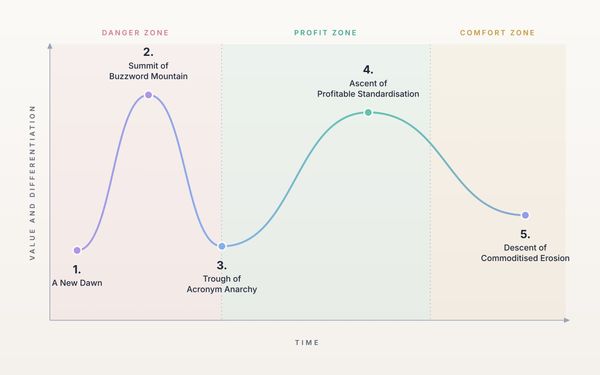

Build the MSP Function the Next Decade Will Reward
The channel keeps asking whether the partner account manager is still relevant. It's the wrong question — and it's quietly letting vendors off the hook for the structural mistakes actually stifling their MSP growth. Every eighteen months or so, the channel rediscovers the same debate: is the partner account manager still relevant? It's a tidy, clickable question. It's also the wrong one. A yes/no answer to a multi-faceted domain misses the point entirely. Ask a closed question and you get a cl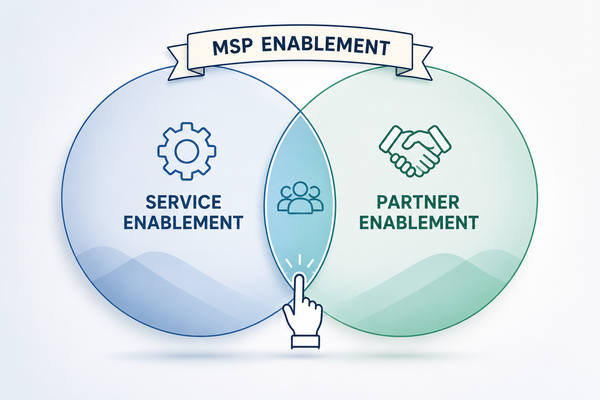
Service Enablement vs Partner Enablement
There’s a question I get asked a lot by vendor channel teams. “What’s the difference between Service Enablement and Partner Enablement?” It’s a fair question. The two get used interchangeably, often by people who haven’t really thought about it. They’re not the same. And the answer to which one a vendor should focus on is — both. Partner Enablement is the channel machinery Modular programs. Specialisation tracks. Onboarding. Discount structure. Rebates. MDF. Eval licenses. Training curriculum.
Stop Calling It a Partnership If All You Want Is a Price
The word partnership gets thrown around more than any other in this industry. Most of the time it means nothing because what’s actually being asked for isn’t a partnership. It’s a better price. Walk into any vendor QBR, any distributor pitch, any channel event and you’ll hear it everywhere. “Strategic partnership.” “Long-term partnership.” “We’re here to partner with you.” It sounds great. It means very little. A deal is not a partnership. A deal is a transaction. It has a start date, an end d
Five Signs Your Service Offer Needs a Refresh
In the last post I made the case for why legacy service refresh matters more than most MSPs give it credit for. Now let's get practical. Here are five signs that a service offer needs attention — and what to do about each one. 1. It lacks differentiation Strip away your logo and your brand colours. Does your service description look exactly like everyone else's? Generic high-level terminology. Vague value propositions. Nothing that tells the customer why this service, from you, is the one wo